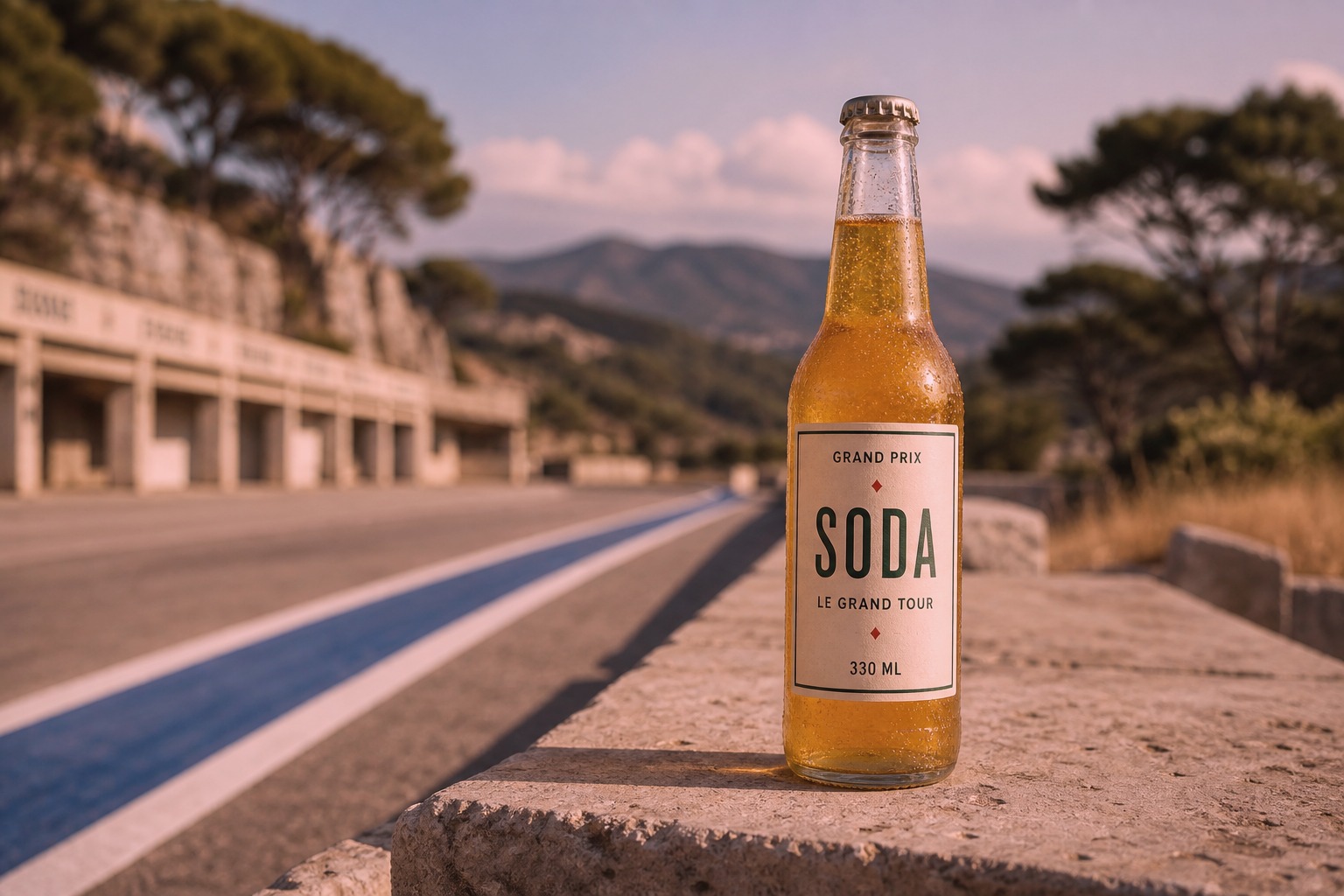
01 — Original · Gentian, lemon peel, sea salt
Le Grand Tour
Our starting grid: dry, bitter, slightly wild. The one Lucien still makes the same way.
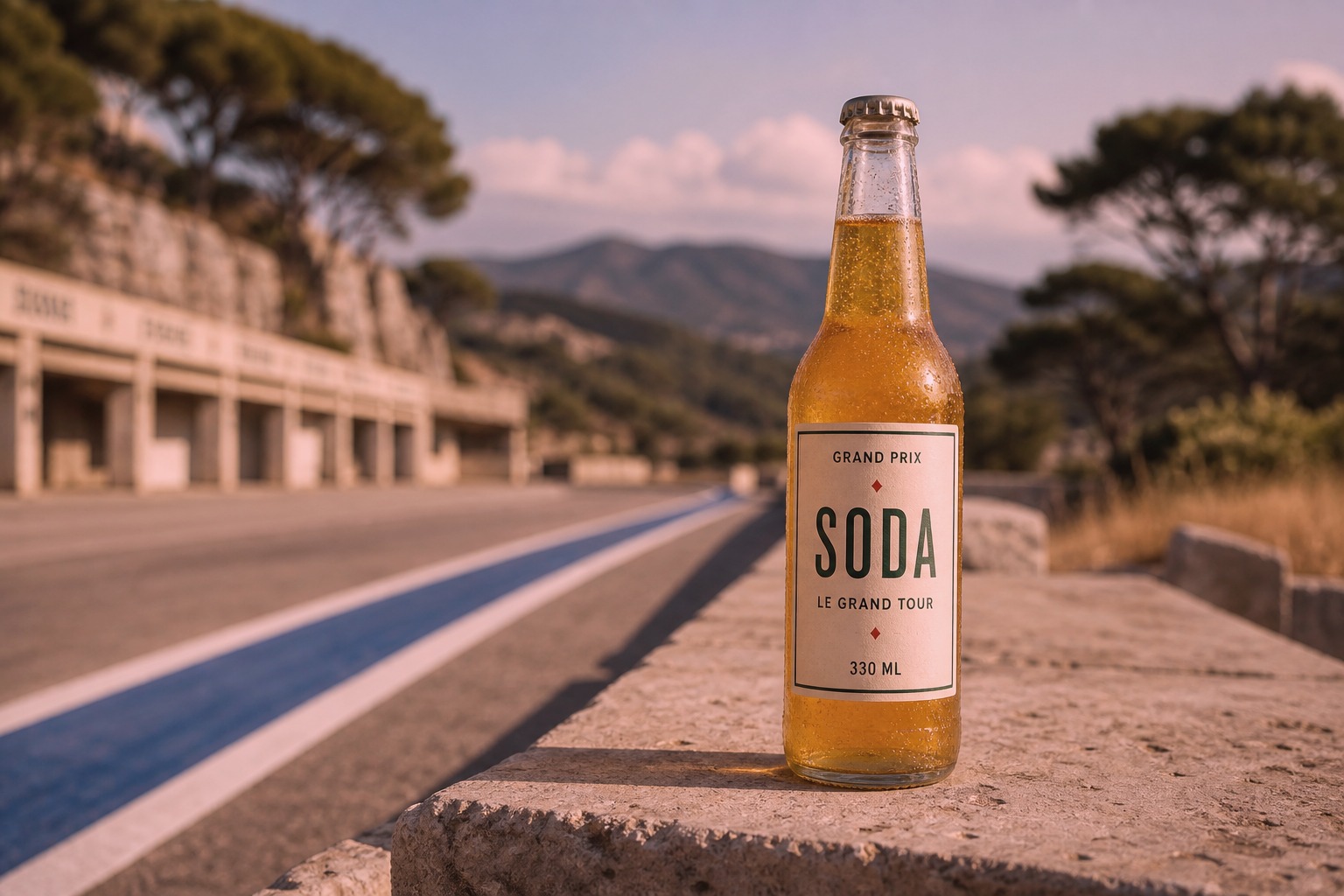
A quietly sparkling Mediterranean aperitif, made for long lunches, pit-lane gossip and the beautiful business of going nowhere fast.
Our story starts in 1987, in a small service station outside Menton. A former bicycle mechanic named Lucien Basset began stirring gentian root, lemon peel and a little sea salt into soda for friends returning from the coast.
Word travelled the old way: by glovebox, by train, by uncle. A case appeared in Turin, then Barcelona, then a very particular café in Milan. Nobody rushed it. Nobody put it on a billboard.
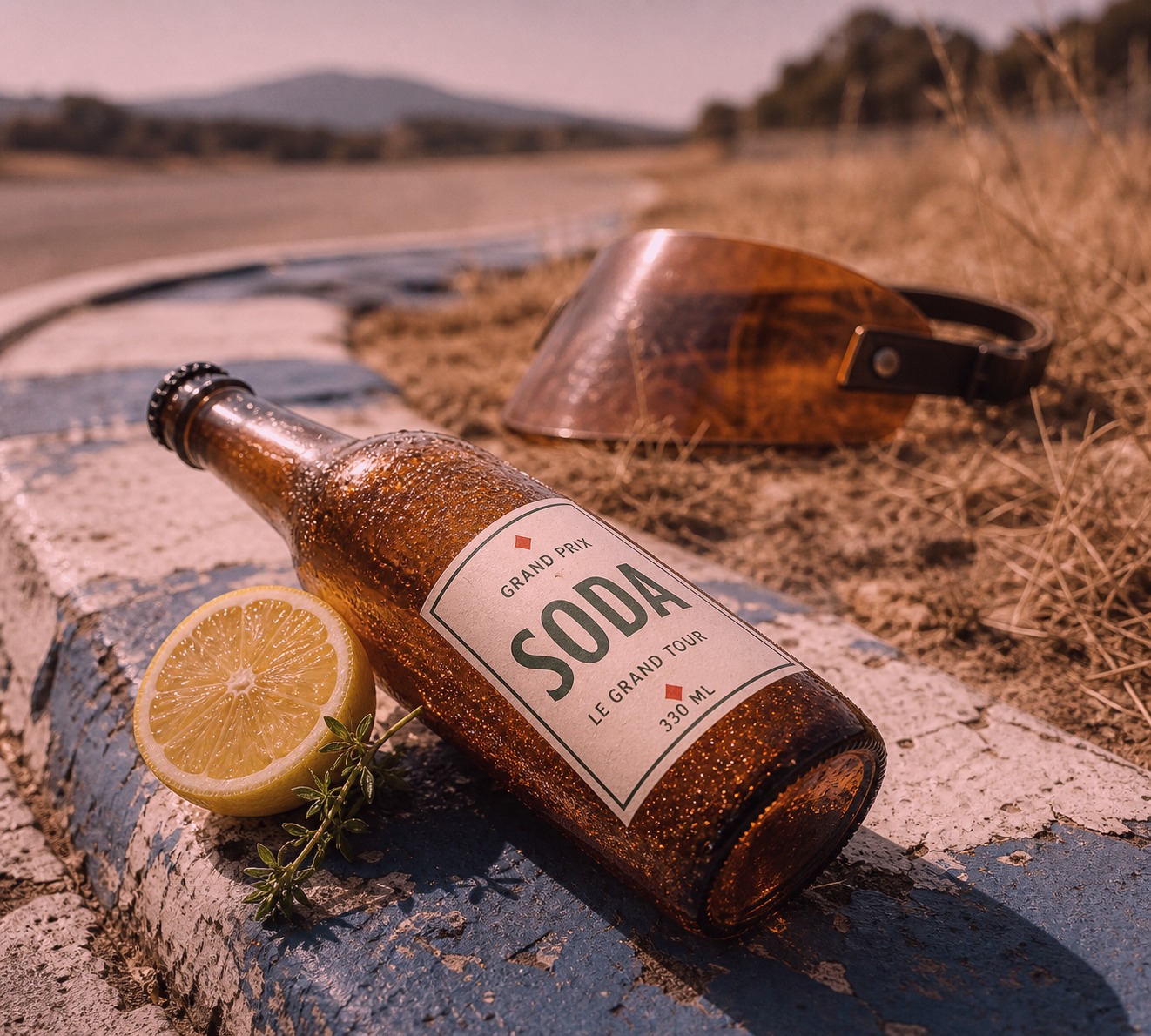
The only good thing about a pit stop is what happens in the shade after it. Gentian brings the bite. Lemon keeps it honest. The two red marks on the label are ours alone — a small nod to the starting grid, one for stop, one for go.
Built around bitter, bright botanicals, not syrup. Drink chilled, over ice, or straight from the bottle after a questionable idea.
Our starting grid: dry, bitter, slightly wild. The one Lucien still makes the same way.
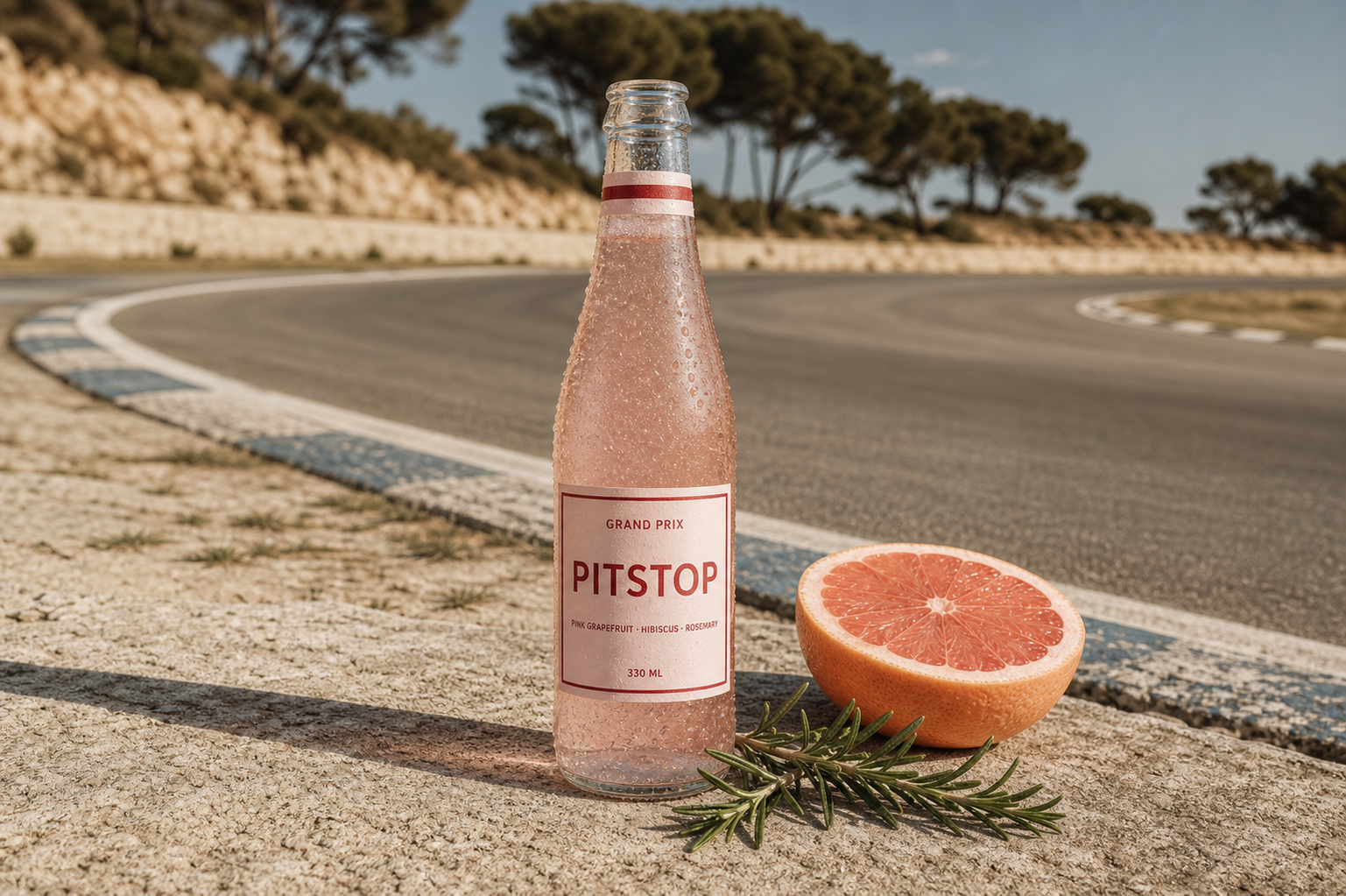
Softer, blushed, still no rush. Best served the moment the engines stop.
Grand Prix Soda is not energy in a can, not a lifestyle in a bottle, and never a reason to hurry. It is a small, sparkling argument for the long way round.
After the closing bell at the Saint-Roch service station, Lucien Basset filled 47 recycled bottles from a copper pan. The labels were cut from a stationer's invoice roll. A dozen bottles went missing before dawn; two turned up in a Fiat Panda headed for Sanremo.
A mechanic at the old Paul Ricard circuit asked for something less sweet than cola and less serious than an apéritif. By Sunday, Grand Prix Soda was cooling in a bucket right on the circuit's famous painted blue-and-red kerb — the "blue line" that gave the stop, and the story, its name.
On Via San Vittore, a barista fed up with his own unreliable espresso machine started keeping bottles cold in the fridge behind it instead. Drivers, students and visiting designers began asking for "the French bottle." The café never paid for advertising; a crate by the till and a few cold ones in the window display did the job instead.
A food-standards inspector wanted to know what, exactly, Grand Prix Soda was. Customs union or not, "gentian" is not a word bureaucrats love. Lucien called it "a map with bubbles." The paperwork took three months; the first proper Belgian order arrived warm and late, cooled down with a borrowed bag of ice from the fish shop next door.
The original notebooks remain oil-stained and mostly illegible. The recipe does not: gentian, lemon peel, sea salt — and enough time to take the scenic route home.